

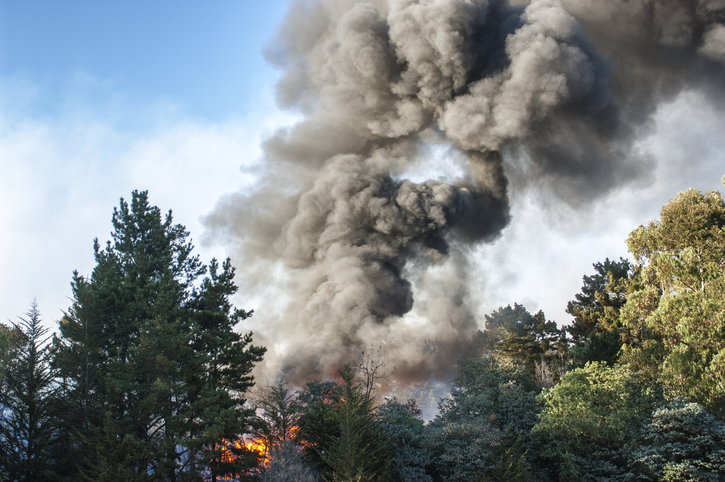


The key message here is prevention—monitor conditions, educate workers and supervisors, and prepare before symptoms occur to protect employees, operations, and the environment. As heat and smoke exposures increase, organizations face growing safety, health, productivity, and business continuity risks.
1. What employers should be doing now to protect workers from smoke and heat-related illnesses, fatigue, and injury
The education and training of employers, as well as workers and supervisors, through internal professionals or by risk management organizations—such as EFI Global, —is a critical component to a preparation plan. It ensures they understand the health risks associated with both heat stress and wildfire smoke exposure, maintain programs that evaluate control these hazards, recognize symptoms, understand risk factors, and know how to monitor and respond when symptoms occur.
Organizations should monitor weather alerts and environmental conditions (temperature, humidity, AQI, PM2.5) to help guide their course of protective actions. For heat stress, this includes providing shade or cooled recovery areas, water/electrolytes, and work/rest schedules, while smoke exposure is a little different. More appropriate actions would be to monitor air-quality action thresholds, limit strenuous outdoor work, offer cleaner-air recovery areas, and use respiratory protection when needed. Throughout, workers should be monitored for early signs of heat or smoke exposure, with workload, schedules, or staffing adjusted as conditions worsen, and should it be needed, emergency response procedures activated immediately.
Several organizations provide valuable resources and tools, including (but not limited to) Occupational Safety and Health Administration (OSHA), National Institute for Occupational Safety and Health (NIOSH), and the American Industrial Hygiene Association (AIHA).
Examples for heat stress resources include:
- OSHA/NIOSH Heat Safety Tool App Heat Safety Tool App (OSHA-NIOSH) | Heat Stress | CDC
- AIHA Thermal Stress App Thermal (Heat) Stress | AIHA
- OSHA, NIOSH and AIHA heat illness prevention guidance
It is important to recognize that occupational heat stress assessment can be complex. Both OSHA and NIOSH identify Wet Bulb Globe Temperature (WBGT) as the preferred method for evaluating occupational heat stress because it considers factors such as radiant heat, air movement, humidity, and environmental conditions. The OSHA/NIOSH Heat Safety Tool uses Heat Index as a practical screening tool but does not include the WBGT and does not replace WBGT-based assessments where more comprehensive evaluation is warranted. The AIHA app does align the output with an estimated WBGT.
2. What are the biggest safety risks tied to prolonged smoke and heat exposure?
The greatest risk is the impact on worker health and well-being, which also can translate to a decrease in both physical capacity and cognitive performance, ultimately leading to the increased risk of worker errors, injuries, and adverse health, environmental and production outcomes.
Prolonged exposure to heat and wildfire smoke can lead to both acute and chronic health effects, including respiratory irritation, cardiovascular strain, dehydration, heat-related illness, and potentially life-threatening conditions such as heat stroke.
From a workplace perspective, declining worker health also increases the likelihood of repercussions of reduced situational awareness, impaired decision-making, slower reaction times, and operational errors, resulting in workplace injuries and environmental or process upsets.
3. How do smoke and heat impact physical and cognitive performance on the job?
Wildfire smoke exposure may reduce respiratory function, increase cardiovascular strain, and decrease oxygen delivery to tissues. Workers may experience fatigue, shortness of breath, reduced endurance, difficulty concentrating, and slower decision-making.
Heat stress can further compound these effects through dehydration, electrolyte imbalance, and elevated core body temperature. These conditions are associated with many of the ones mentioned above such as reduced alertness, impaired judgment, and reduced physical work capacity.
Potential health effects associated with wildfire smoke exposure
- Respiratory irritation
- Decreased lung function
- Cardiovascular stress
- Carbon monoxide exposure
- Potential increased long-term disease risk
Potential health effects associated with heat stress
- Heat rash
- Heat cramps
- Heat exhaustion
- Dehydration and electrolyte imbalance
- Heat stroke, which may be fatal
4. What proactive strategies can employers implement immediately?
It can be as simple as educating, monitoring, and preparing. For the education portion, be sure to increase awareness and training to ensure workers and supervisors understand the health effects of heat and smoke exposure, early warning signs and symptoms, and protective measures/emergency response actions.
For monitoring, it’s crucial to get these programs to point where they’re supporting simple but effective monitoring of both environmental conditions such as temperature, humidity, WBGT, air quality (AQI/PM2.5), and weather advisories, as well as worker symptoms and signs of heat-related illness.
As for the prep portion, many organizations already have heat illness prevention plans, but refreshing employee awareness, reviewing procedures, and validating response readiness can significantly improve effectiveness during extreme weather events. Additionally, wildfire smoke may have historically been an infrequent or unrecognized concern for many organizations. However, recent wildfire seasons have demonstrated that smoke impacts can extend hundreds or even thousands of miles from fire locations. Employers should incorporate smoke monitoring, response planning, and worker education into existing environmental health and safety programs.
5. Why is preparedness now critical for workforce safety and productivity?
Extreme heat events and wildfire smoke episodes, which are reportedly becoming more frequent, can affect both workplace and personal activities. Workers who understand the hazards, recognize symptoms early, and know when to intervene are far more likely to prevent serious outcomes.
Preparedness goes well beyond the workplace as it is equally important for protecting workers, families, and communities during increasingly frequent heat and smoke events.
A personal example highlights the importance of this point. A member of my family experienced significant heat stress during a recent morning sporting activity. Although the air temperature was only around 80°F in full sun exposure, humidity approached 95%, creating conditions that substantially increased heat strain during extreme work/exercise loads. Symptoms experienced included nausea, dizziness, vomiting, weakness, excessive sweating, and thirst. Fortunately, assistance was provided quickly and the individual recovered fully.
That experience showed that due to lack of acclimatization following a rapid shift from cool to hot, humid weather, inadequate hydration, and a failure to recognize environmental condition and adjust the physical work/exercise load this combination became a recipe for key risk factors. With greater awareness and preparation, the risk is minimized, and the event likely could have been prevented entirely.
References
- OSHA-NIOSH Heat Safety Tool App (CDC)
https://www.cdc.gov/niosh/heat-stress/communication-resources/app.html [cdc.gov]
- OSHA Heat Illness Prevention Resources
https://www.osha.gov/heat [osha.prod….ce.dol.gov], [osha.gov]
- OSHA Technical Manual: Heat Stress and WBGT Assessment
https://www.osha.gov/otm/section-3-health-hazards/chapter-4 [osha.gov]
- AIHA Heat Stress Application
https://www.heat.gov/data-tools/aiha-heat-stress-application/ [HEAT.gov]
- NIOSH Wildland Fire Smoke Guidance
https://www.cdc.gov/niosh/outdoor-workers/about/wildfire-smoke.html [cdc.gov]
- EPA Wildfire Smoke and Health Resources
https://www.epa.gov/wildfires/wildfire-smoke-and-health-factsheets [epa.gov]
Tags: industrial hygiene, smoke, wildfire
Cynthia Eghbalnia, MPH, CIH, CSP
Senior Industrial Hygienist Advisor