

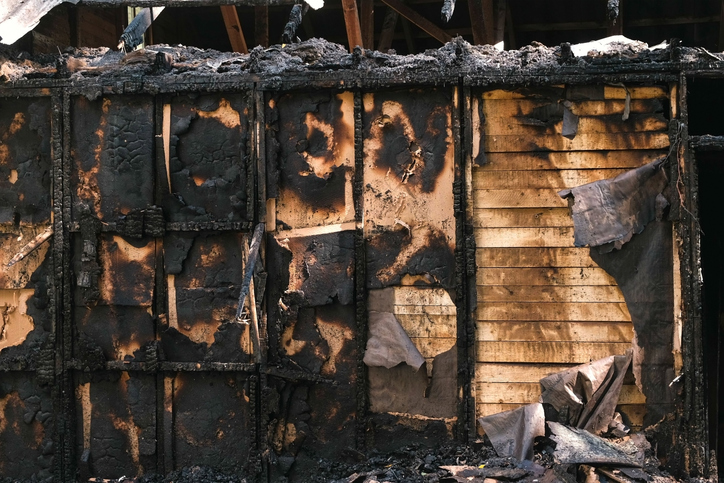


How early decisions can influence investigative findings, recovery efforts, subrogation opportunities, and claim outcomes.
When a significant fire occurs, attention immediately shifts toward life safety, emergency response, business interruption, and recovery efforts. Those priorities are understandable. However, some of the most important decisions affecting a claim, investigation, and potential recovery are often made within the first 24 hours following the loss.
At EFI Global, we routinely investigate complex fire losses where early actions, whether intentional or not, significantly impact the ability to determine origin and cause, identify responsible parties, and support informed claim decisions.
The reality is simple: The first day after a fire often determines the quality of the investigation that follows.
Evidence Is Most Vulnerable Immediately After the Fire
A fire scene is dynamic. Emergency responders, contractors, property owners, restoration vendors, and recovery teams may all be present shortly after the incident.
While recovery efforts are important, evidence can be unintentionally altered, moved, or destroyed before investigators have the opportunity to examine the scene.
In many cases, the physical evidence necessary to determine how a fire started exists only once. Once it is removed, damaged, or discarded, it may be impossible to recover.
One of the most valuable steps a property owner or insurer can take is ensuring the scene is appropriately secured and preserved until qualified experts can evaluate the area of origin.
Recovery Activities Should Not Outpace Investigation Activities
The desire to clean up and begin rebuilding is understandable. Businesses want to resume operations. Property owners want to move forward.
However, early demolition, debris removal, equipment disposal, or structural alterations can create significant investigative challenges.
We often remind clients that recovery and investigation must work together, not compete with one another.
A properly coordinated investigative strategy allows critical evidence to be documented and preserved while still supporting timely recovery efforts.
The objective is not to slow progress. The objective is to prevent irreversible mistakes.
The Cause Is Not Always What It Appears to Be
One of the most common misconceptions following a fire is that the cause is obvious.
The area with the most damage is not necessarily the point of origin. The first observations made immediately after a fire may not accurately reflect the sequence of events that led to ignition.
Complex losses frequently require detailed scene examination, witness interviews, engineering analysis, electrical evaluations, equipment testing, and evidence documentation before reliable conclusions can be reached.
Assumptions made too early often create unnecessary complications later in the process.
Facts should drive conclusions, not initial impressions.
Early Documentation Creates Long-Term Value
Some of the most valuable information available during a fire investigation is collected in the earliest stages of the event.
Security footage, alarm system data, witness observations, maintenance records, operational logs, photographs, and emergency response information can all play important roles in understanding what occurred.
Unfortunately, digital information can be overwritten, lost, or deleted if steps are not taken to preserve it promptly.
Today’s investigations extend well beyond the physical fire scene. They increasingly involve data preservation, digital documentation, and technical analysis that can provide critical insight into the incident.
Large-Loss Investigations Require a Multidisciplinary Approach
Today’s fire losses are often more complex than ever before.
Investigations may require collaboration between fire investigators, forensic engineers, electrical specialists, mechanical experts, building consultants, and other technical professionals.
The sooner the appropriate resources are engaged, the greater the opportunity to preserve evidence, identify contributing factors, and provide stakeholders with reliable findings.
At EFI Global, this multidisciplinary approach allows us to address both the technical and practical challenges associated with complex losses while helping clients navigate the broader implications of the event.
The Most Important Investment Is Early Action
In the aftermath of a fire, stakeholders are often focused on what was lost.
Equally important is protecting what remains.
Critical evidence, digital records, witness accounts, and physical conditions can provide answers that ultimately influence claim outcomes, subrogation opportunities, litigation strategies, business recovery efforts, and risk management decisions.
The organizations that achieve the best outcomes are often those that act quickly to preserve information before it disappears.
At EFI Global, we help clients protect those opportunities from the very beginning. Through rapid response, forensic expertise, engineering support, and coordinated investigative services, we provide the clarity needed to make informed decisions during some of the most challenging moments a business or property owner may face.
Because when it comes to fire investigations, the costliest mistakes are often not made during the investigation itself. They are made before it begins.
Stephen Buck
Vice President and Managing Fire Principal