

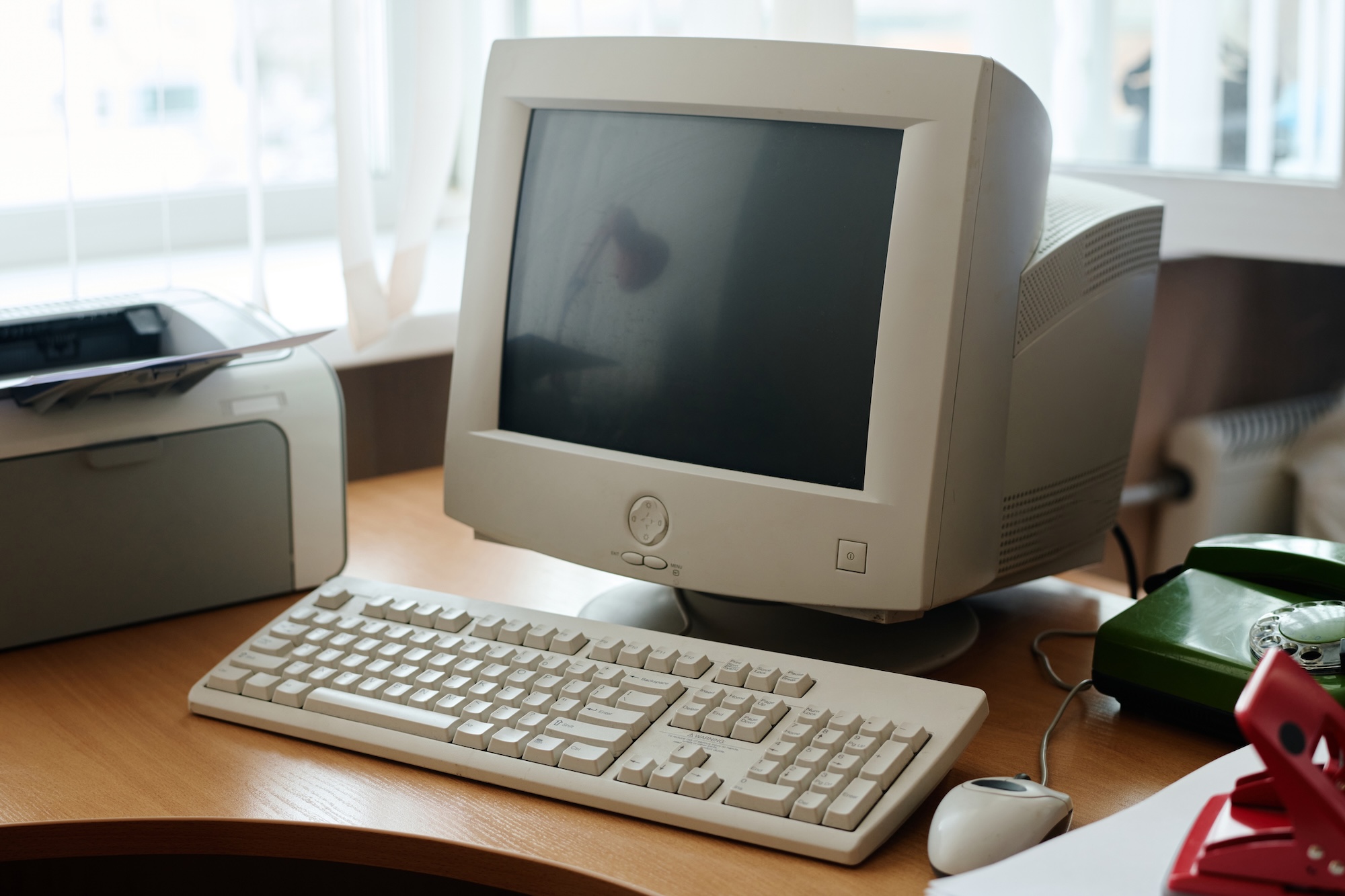


Walk into almost any manufacturing facility and you’ll eventually find it: a computer running Windows XP, 95, or even DOS – still in active use, still critical to operations.
At first glance, it looks outdated, but in industrial environments, that “old computer” is rarely just a computer. It’s part of a tightly integrated system that includes control logic, proprietary drivers, communication pathways, validated workflows, and operator behavior built over years. What it preserves isn’t obsolete technology – it’s stable, known performance.
In operational technology, stability has real value.
Unlike office IT, where upgrades prioritize speed and convenience, plant-floor systems are governed by safety, availability, and repeatability. Even small changes can ripple through the system – affecting PLC communications, software compatibility, or validated processes. What seems like a simple replacement can quickly become a complex engineering effort involving testing, reconfiguration, and downtime.
That’s why many facilities don’t rush to modernize. Instead, they manage risk. They stabilize what works, isolate vulnerabilities, and extend the life of systems that still reliably deliver. It’s not resistance to change – it’s a deliberate calculation about where disruption introduces more risk than it removes.
For risk managers, engineers, and adjusters, this distinction is critical. The real question isn’t how old the computer is – it’s what depends on it. Because when a legacy system fails, the exposure isn’t just the hardware. It’s the entire process built around it, and the time and effort required to restore it to a known, working state.
What looks outdated from the outside often reflects a rational decision on the inside: preserve performance, control risk, and avoid unintended consequences.