

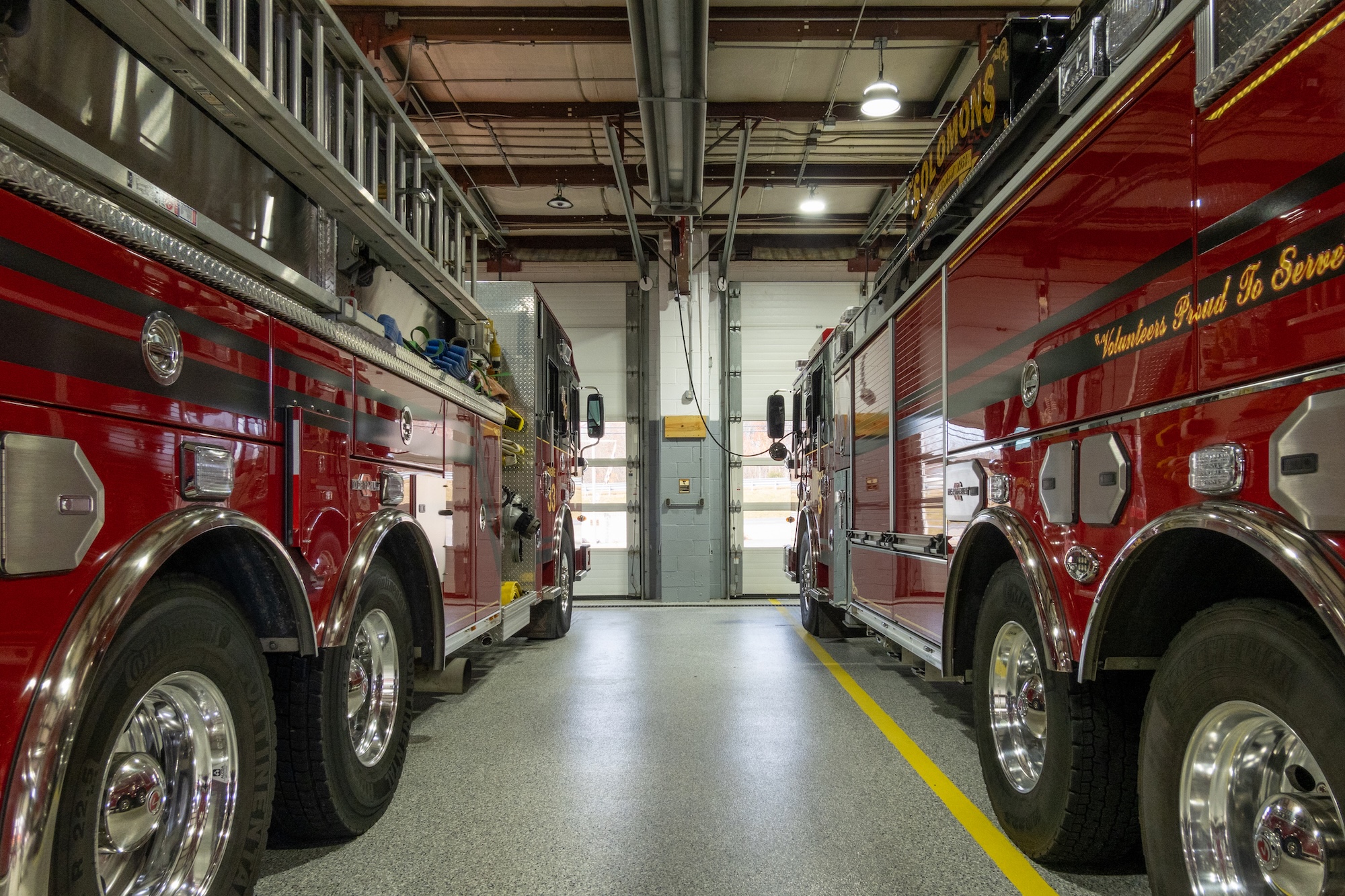


Fireboats, rescue trucks, water tankers and other types of firefighting equipment represent significant investments for communities. When one of these impressive machines is damaged, it’s essential for claims teams to understand the differences between them and work closely with engineers to accurately assess the damage.
Every piece of equipment – from the pumper truck to the specialized wildland fire engine – plays a critical role in emergency response. See how each one is unique:
- Pumper trucks, or engines, are the workhorses of the fire equipment industry and commonly deployed for structural and vehicle fires. They transport firefighters, thousands of gallons of water, hoses and a powerful water pump. Variations include attack, rescue and high-flow industrial pumpers, and pumper tankers. Due to frequent use, they are susceptible to damage from emergency operations and traffic incidents.
- Aerial ladder trucks are equipped with a long, extendable ladder to reach elevated locations. Their primary function is to provide access to upper floors to extinguish fires, rescue occupants and assist with ventilation. Damage to the aerial ladder mechanism is a critical concern.
- Aerial platform trucks have an extendable ladder with a platform or bucket at the end. They provide a stable elevated position for firefighters to operate high-pressure nozzles and conduct safer rescues. Damage assessment requires careful inspection of the platform’s structural integrity and control mechanisms.
- Airport crash tenders, or aircraft rescue and firefighting vehicles, can quickly reach aircraft incidents and extinguish large fuel fires. They can maneuver across rough terrain and have large water capacity. Damage to specialized extinguishing systems is critical.
- Fireboats fight fires on water and waterfront properties with powerful water pumps and cannons. They also assist with search and rescue efforts, and provide emergency medical services and pollution control support. Damage to the hull, propulsion or water delivery system impacts their effectiveness.
- Hazardous materials apparatus trucks contain and mitigate hazards with specialized equipment for dangerous substance identification, air monitoring, leak containment, protection and decontamination. Damage compromises the ability to safely manage incidents involving hazardous materials.
- Light and air units support major emergency scenes, replenishing air supply for self-contained breathing apparatuses and providing lighting. They transport high-capacity air compressors, spare cylinders and generators. Damage to air compression or electrical systems impairs support to firefighters.
- Quint trucks, or quintuple combination pumpers, include a fire pump, water tank, fire hose, aerial ladder and ground ladders. They offer versatility in a single vehicle, making them suitable for smaller departments. Damage assessment requires evaluating the pumping system and aerial ladder components.
- Rescue trucks transport specialized tools for vehicle extrication, structural collapse, confined space entry, high-angle rescues and other emergencies. They carry equipment, such as hydraulic rescue tools, cutting torches, ropes, winches and generators. Assessing damage requires understanding the functionality and repair needs of a wide range of tools and systems.
- Water tankers, also known as tenders, serve as mobile water reservoirs. They are crucial in rural areas with limited access to pressurized water. They carry large quantities of water to replenish pumper trucks. They often have portable pumps and dump valves for rapid water transfer. Damage to tankers can significantly impact firefighting efforts in areas where water is scarce.
- Wildland fire engines, or brush trucks, are designed for combating fires in natural environments. They can navigate rough terrain and access remote areas. Brush trucks have smaller water tanks, high-pressure pumps and foam systems. Damage to off-road capabilities is a primary concern.
Common malfunctions and repair challenges
Modern fire equipment relies heavily on complex electrical systems to power a multitude of critical functions, making electrical failures a significant concern for operational readiness and insurance claims. Common electrical problems include:
- Frayed, loose or corroded wiring
- Alternator failures
- Battery issues
- Sensor failures
- Control system faults
- Electrical overloads
- Corrosion
The integration of sophisticated electronic control systems and computer-controlled components requires specialized expertise for diagnosis and repair. Diagnosing intermittent electrical faults, such as those caused by sensor malfunctions or wiring issues, can be particularly challenging. Many repairs, especially those involving proprietary systems, may need to be done by dealership technicians.
Fire equipment is also susceptible to a range of mechanical failures due to their heavy usage, demanding operational conditions and exposure to environmental factors. Common issues include:
- Structural damage
- Hydraulic system failures
- Brake system malfunctions
- Engine and transmission problems
- Pump failures
Repairing mechanical failures requires technicians with expertise in heavy duty vehicles. Hydraulic and pump systems, which are critical for many fire truck functions, require specific knowledge of fluid dynamics, high-pressure systems, and specialized testing and calibration tools. Major repairs, such as those involving the engine, transmission or fire pump, can be costly and time-consuming.
Considerations for repairing and replacing equipment
The decision to repair or replace fire equipment involves careful consideration of factors such as age, damage severity, repair and replacement costs, availability of parts, and safety and compliance standards. In addition, lead times for procuring replacement fire equipment can be as long as 36 months, making it a key consideration due to the impact on fire department operations. Exploring options such as available stock trucks or pre-engineered models with quicker production rates can help mitigate the impact of these delays.
Accurate assessments drive effective claims resolution
Fire trucks and equipment are not merely oversized machines; they are complex, costly and built to protect lives and property. Each vehicle is susceptible to damage from various causes, such as traffic accidents, rollovers, mechanical failures and operational stress. While insurance adjusters are skilled in evaluating a wide range of losses, the technical nature of fire equipment often requires mechanical, electrical, structural or forensic engineers who can bring unique expertise to the assessment process. Ultimately, recognizing their complexity, and understanding the value of involving specialized engineers in damage assessments, will enable adjusters to handle these claims with greater accuracy, ensuring fair, effective resolution.